


Customers often form their first impression of a small business before speaking to anyone. A website photograph, social media post, product image, or promotional graphic can influence whether someone feels comfortable exploring a service or making a purchase.
For smaller businesses, visual communication is particularly important because customers may not recognize the brand immediately. Clear photographs, consistent designs, and accurate visual information help people understand what a business offers and what they can expect.
Building customer confidence through better visual communication does not require expensive equipment or professional design teams. It starts with presenting information clearly, consistently, and honestly.
Why Visual Communication Matters for Customer Trust
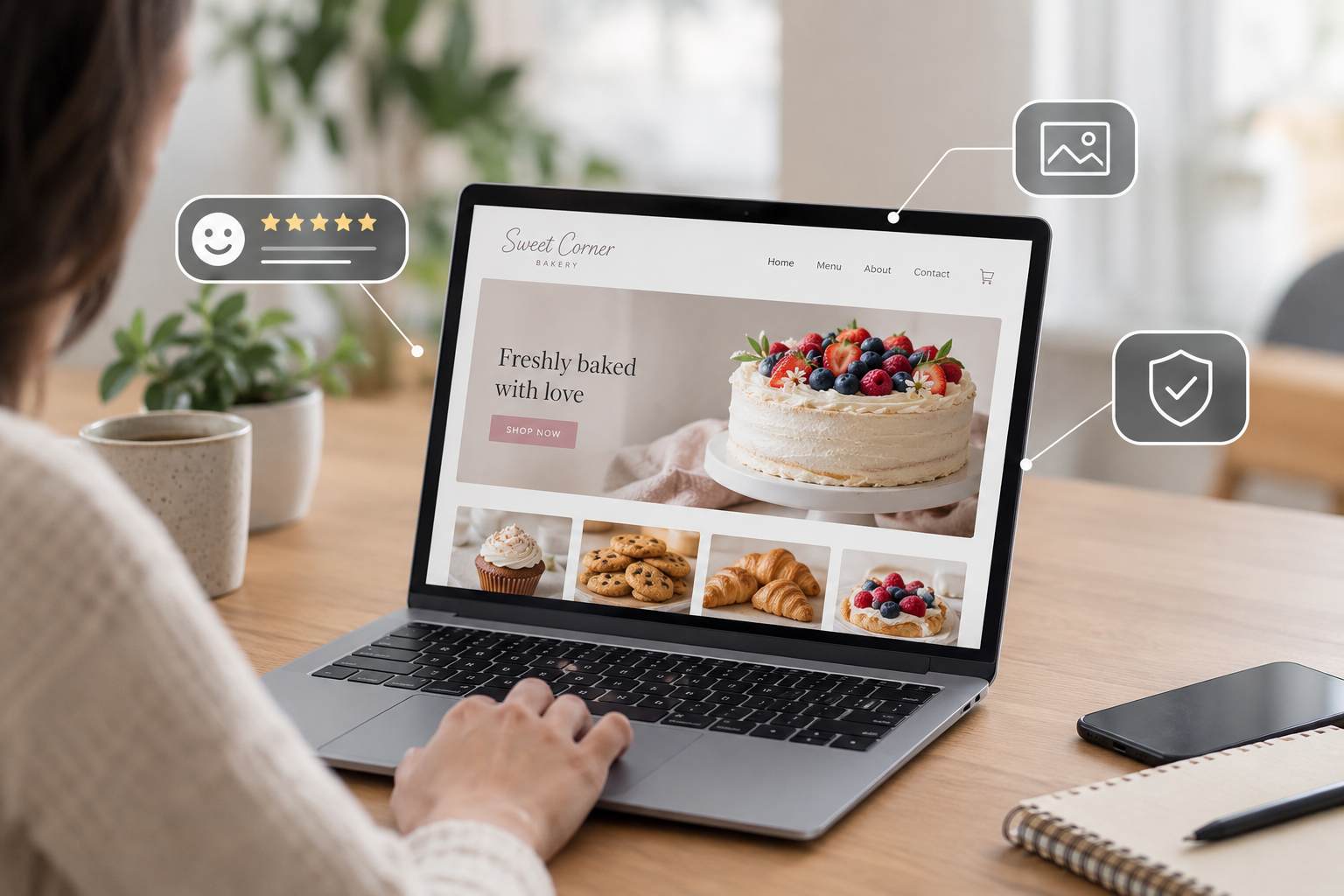
Visual content helps customers understand a business without reading lengthy descriptions. Images can explain product features, demonstrate services, and show the people behind a company.
However, attractive visuals alone do not establish credibility. Customers also need accurate information that matches their expectations.
First Impressions Influence Customer Decisions
Consider two local bakeries advertising online. One shares clear photographs of its actual cakes, while the other relies on generic images unrelated to its products.
Customers comparing both businesses may feel more confident ordering from the bakery that shows what it genuinely sells.
This example highlights an important principle: visual communication should reduce uncertainty rather than simply attract attention.
Use Authentic Images to Represent Your Business
Original photographs help customers understand what makes a business different. They also provide information that generic stock images cannot always communicate.
For small businesses, authenticity often matters more than expensive photography.

Show Real Products, Services, and Workspaces
A restaurant can photograph its actual dishes, while a furniture business can show products from different angles. Service providers can share genuine examples of completed projects, provided they have permission.
- Using clear photographs with natural lighting.
- Showing products from multiple angles.
- Including realistic examples of services.
- Avoiding excessive filters that change product appearance.
- Updating images when products or facilities change.
For online retailers, photographs should accurately represent the size, colour, and features of items being sold.
Check Visual Accuracy Before Publishing
Digital editing tools make creating marketing graphics easier, but they also increase the importance of reviewing visual content carefully.
Businesses using externally supplied photographs or generated illustrations may consider an AI image detector as an additional screening tool when assessing image origins.
However, detection results are not definitive proof. Businesses should also check original files, image permissions, product details, and whether the visuals accurately represent their offerings.
Maintain Consistency Across Digital Platforms

Customers may encounter a business through Instagram, Google search, its website, or an online advertisement. Significant differences between these channels can create confusion.
Consistent visual branding helps customers recognize that these accounts belong to the same business.
Keep Branding Simple and Recognizable
Small businesses can establish consistency by using the same logo, a limited colour palette, and readable fonts across marketing materials.
A local coffee shop, for example, might use similar colours and photography styles across its menu, website, and social media pages.
Consistency does not mean repeating identical graphics everywhere. Instead, each platform should communicate a recognizable brand identity while presenting information suited to its audience.
Make Visual Information Easy to Understand
Good visual communication should answer customer questions quickly. Complicated layouts, crowded graphics, and unclear photographs can make even straightforward information difficult to understand.
Businesses should prioritize clarity over decoration.

Improve Readability and Accessibility
Customers access digital content through different devices and may have different accessibility needs.
- Choosing readable fonts and clear text sizes.
- Maintaining sufficient contrast between text and backgrounds.
- Adding meaningful alternative text to informative website images.
- Avoiding graphics overloaded with information.
- Checking how visuals appear on mobile screens.
For example, a promotional graphic displaying prices should remain readable without requiring customers to zoom repeatedly.
Important details should also appear in regular text rather than existing only inside an image.
Use Customer Feedback to Improve Visual Content

Small businesses do not need to guess whether their visual communication works. Customer questions and feedback can reveal missing information.
If shoppers repeatedly ask about product dimensions, additional photographs showing scale may help. If customers struggle to locate opening hours, a clearer website layout could resolve the problem.
Review What Customers Actually Need
Businesses can examine frequently asked questions, website behaviour, and customer comments to identify communication problems.
The goal is not simply to produce more content. It is to make existing information more useful, accurate, and easier to understand.
Conclusion
Better visual communication helps small businesses build customer confidence by making their products, services, and brand identity easier to understand.
Authentic photographs, consistent branding, accessible designs, and accurate information all contribute to a more dependable customer experience.
Small businesses should begin by reviewing their current visuals, correcting misleading details, and improving areas that cause confusion. These practical changes can support stronger customer relationships and more informed purchasing decisions.