
Using images and videos from others usually requires one of four legal bases: permission, a valid license, public domain proof, or a serious fair use argument. Credit alone is not permission.
Cropping a photo, adding a filter, placing a clip inside a reel, or writing “no infringement intended” also does not remove copyright risk.
For bloggers, YouTubers, TikTok sellers, newsletter writers, educators, agencies, and social media managers, the practical question is whether you can prove why you had the right to publish that visual.
In U.S. law, copyright can exist automatically once an original work is fixed in a tangible form, including a photograph or video file. Registration is not required for protection, although U.S. works generally need registration or a refusal before a copyright owner can sue in federal court.
Why Online Visuals Are Not Free by Default
A photo found through Google Images, Instagram, Pinterest, Reddit, TikTok, or a news site still has an owner unless a reliable rights note says otherwise.
Copyright gives owners control over acts such as reproduction, adaptation, distribution, public display, and public performance through exclusive copyright rights.
“I found it online” is not a rights strategy. It is only a discovery method. The same issue applies to screenshots from movies, sports broadcasts, video games, creator reels, product pages, and online courses.
Also, the same logic applies when creators use tools such as savefrom.co.id to save online videos. A download tool will make access easier, but it does not answer the legal question of whether you have permission to reuse, edit, monetize, or republish the file.
Reuse Path
When It May Work
Human Consequence
Direct permission
Creator approval, brand deal, written email
Slower, but stronger proof
Paid stock license
Ads, websites, thumbnails, client work
Costs money, lowers dispute risk
Creative Commons
Blogs, education, and some commercial projects
Useful, but the terms must match the use
Public domain
Historic works, expired copyright, and some government materials
Low cost, but the right status must be checked
Fair use
Commentary, criticism, news, teaching, research
Powerful, but fact-specific
What Counts as Real Permission?
Permission means the rights holder allowed your specific use. A casual “sure” in a direct message may be enough for a low-stakes repost, but it is weak for paid ads, client campaigns, packaging, YouTube monetization, or course material.
A good permission record should identify the exact image or video, allowed platforms, commercial status, editing rights, duration, and credit language. Save screenshots, invoices, email approvals, license pages, and download receipts.
The boring answer is often the safest one. A creator who cannot show permission later may lose ad revenue, client trust, or platform access before any court filing.
Is Fair Use Enough for Using Images and Videos From Others?
Fair use can allow reuse without permission, but it is not a magic label. U.S. copyright law lists purposes such as criticism, comment, news reporting, teaching, scholarship, and research, then applies four fair use factors: purpose and character, nature of the work, amount used, and effect on the market.
The U.S. Copyright Office also warns that no fixed number of words, notes, frames, seconds, or percentage automatically qualifies as fair use. Each decision depends on the full context.
A movie-review channel using 8 seconds of a scene to criticize camera movement has a stronger argument than a brand using the same 8 seconds as background texture in an ad. Purpose matters. Market harm matters too.
The 2023 Supreme Court decision in Warhol Foundation v. Goldsmith made the warning sharper for visual creators. The case involved Warhol works based on Lynn Goldsmith’s Prince photograph, and the Court focused on whether the later licensed use shared a similar commercial purpose with the original photograph.
Creative Commons Is Not One Single Permission Slip
Creative Commons licenses vary. CC BY generally allows reuse with attribution. CC BY-NC limits reuse to noncommercial use. CC BY-ND blocks sharing adapted versions. CC BY-SA can require later adaptations to carry the same license.
The common mistake is treating every CC image as “free.” A monetized YouTube thumbnail may not fit a noncommercial license. A cropped or color-graded image may violate a no-derivatives license. A client blog using a CC BY image without credit may breach attribution terms.
For attribution, use a compact formula:
Title, creator, source, license, changes made.
Stock Sites Lower Risk, But Check the Limits
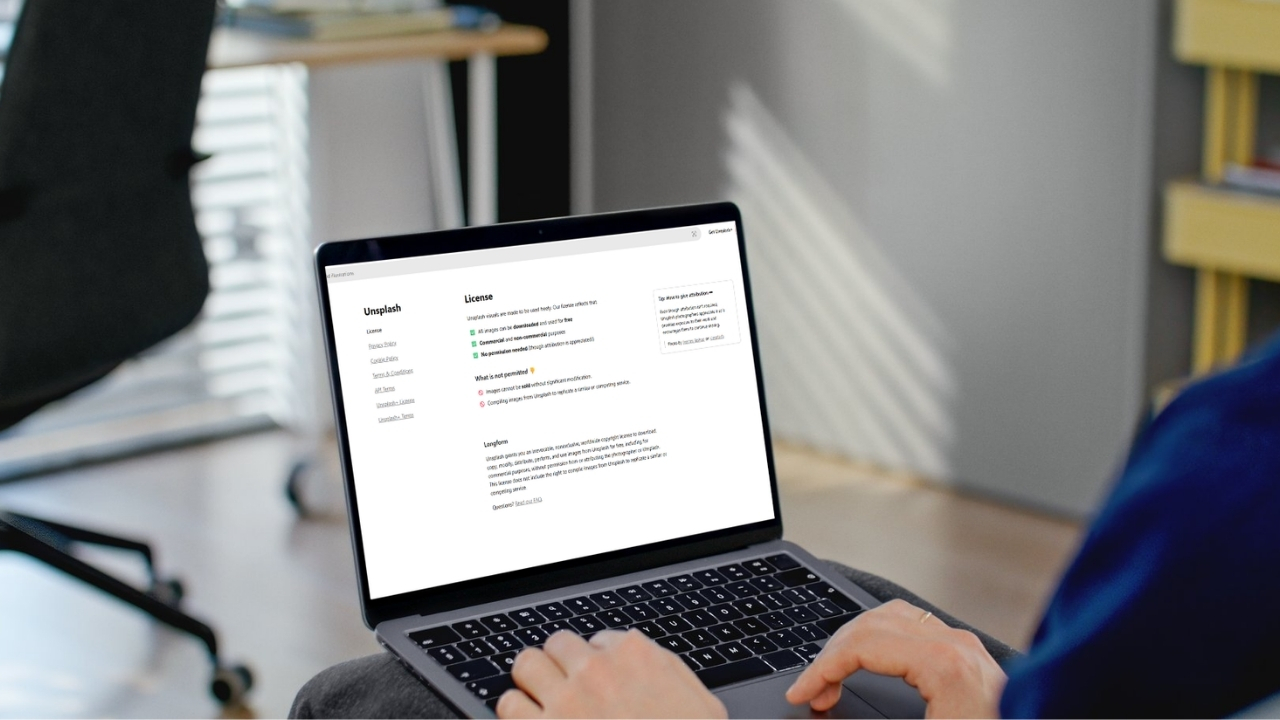
Free stock sites can help small creators, but the license should still be saved. The Unsplash license allows free commercial and noncommercial use without permission, while barring uses such as selling images without meaningful modification or compiling them into a competing service.
The Pexels license also allows free use of photos and videos, says attribution is not required, and allows modification.
The hidden issue is not only copyright. A photo may show a recognizable person, private property, a logo, artwork on a wall, or a trademarked product.
For a blog header, the risk may be modest. For a paid ad, product label, political campaign, or billboard, releases and trademark clearance matter more.
What People Usually Miss: Platform Sharing Is Not Copyright Clearance
A repost button, embed tool, duet feature, stitch option, or share icon does not always mean you can download, edit, and republish the original file anywhere you want. Platform tools may permit sharing inside the platform, while copyright law still controls separate uses.
View this post on Instagram
YouTube has copyright management tools such as Content ID and the Copyright Match Tool. The Copyright Match Tool can identify videos that are the same or very similar to earlier uploads and let creators review possible reuse.
Separately, YouTube says a copyright strike means content was removed after a legal removal request that appeared valid.
The human consequence is immediate. A creator may spend hours editing a video, then lose monetization, traffic, or the upload itself because a rights holder objects.
Public Domain Still Needs Verification
Public domain material can be excellent for educators, documentary creators, bloggers, and publishers. Old photos, government records, and historic films can add authority without stock-photo sameness. Still, rights notes must be read carefully.
The Library of Congress says its rights and restrictions pages provide general guidance and collection-specific statements, not a blanket guarantee for every item.
USA.gov also notes that text, images, and logos on federal websites may carry copyright or other restrictions.
AI Edits Do Not Erase the Original Rights Problem

AI tools make copied visuals easier to disguise, but not safer. Removing a watermark, expanding a background, recreating a still in another style, or generating a near-copy of a recognizable character can still create legal and platform risk.
The U.S. Copyright Office’s AI materials emphasize that copyright law still relies on human authorship for protection, while its generative AI work highlights ongoing disputes over copyrighted works and fair use.
For creators, the working rule is blunt: AI can help edit media you already have rights to use. It should not become a shortcut for copying media you never cleared.
A Simple Checklist Before Publishing
- Who owns or controls the visual?
- Does the license cover commercial use?
- Are edits allowed?
- Is attribution required?
- Could the use replace the original market?
- Do platform rules add limits?
- Are people, brands, artwork, or private locations visible?
If one answer is missing, choose a safer alternative: shoot your own media, buy licensed stock, use a verified public domain source, request permission, or replace the visual.
Summary
@dadchats Can you use other people’s videos in your own content? I get this question a lot on here, and the law is much different than most people realize. From fair use to the public domain, here’s a somewhat longer summary than what I usually give, and in landscape mode to boot! As always, for educational purposes only and does not constitute legal advice. #law #lawyer #copyright #education #educational #fairuse #copyrightlaw ♬ original sound – dadchats
Using images and videos from others is safest when creators treat rights clearance as part of production, not as a last-minute caption. In 2026, copyright enforcement is faster, platform-matching tools are stronger, and AI makes copied visuals harder to excuse.
The safest answer is less exciting, but more useful: use media you created, licensed, verified as public domain, or can justify under a careful fair use analysis.