
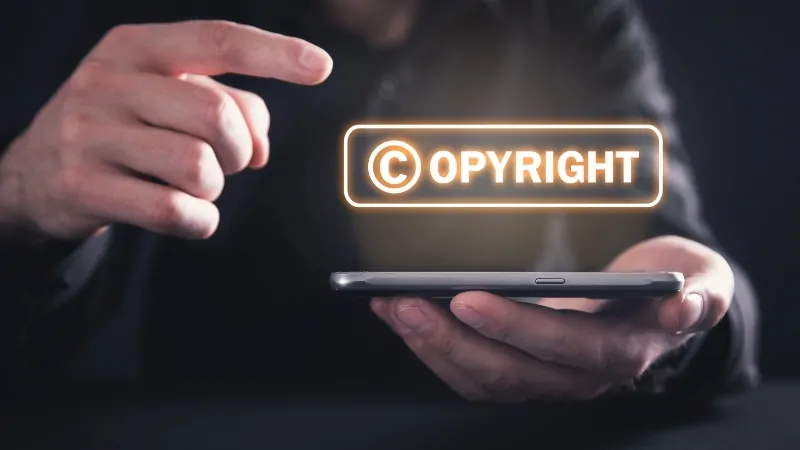
Digital art faces constant risk of unauthorized copying due to instant sharing, file duplication, and global access. Artists often see work reused without permission across social media, marketplaces, and commercial platforms.
Copyright law gives creators enforceable control over how artwork gets used, sold, altered, and displayed.
Legal awareness helps artists defend ownership, negotiate licenses, and respond effectively to misuse in online and international contexts.
Coverage ahead explains copyright fundamentals, infringement scenarios, enforcement options, and protective strategies relevant to modern digital creators.
Let’s go through all the major things digital artists need to be aware of when it comes to copyright infringement.
What Every Digital Artist Should Know
Copyright law grants exclusive rights once artwork exists in a fixed form, such as a saved digital file. Protection activates automatically at creation without formal filings or notices.
Legal control covers several creator privileges that directly affect circulation, monetization, and modification of artwork.
Each right operates independently and can be licensed or enforced separately:
- Reproduction rights regulate copying, scanning, duplication, and digital replication in any format
- Derivative rights govern edits, adaptations, remixes, recoloring, and compositing
- Distribution rights control sales transfers, uploads, downloads, and sharing
- Public display and performance rights apply to websites, online galleries, social media platforms, projections, and digital exhibitions
Ownership attaches immediately once creative expression becomes tangible. Saving, exporting, or uploading a file satisfies fixation requirements. Registration does not affect ownership validity but directly impacts enforcement remedies.
Protected material includes a wide range of creative formats common in modern workflows. Eligibility depends on originality rather than software, hardware, or production method:
- Paintings, sketches, and hand-drawn illustrations
- Digital renderings, mixed media compositions, and vector artwork
- Collages, photomanipulation, and photographic works
- NFTs are tied to original creative expression rather than tokens alone
Moral rights hold a strong influence in several jurisdictions, especially across the UK and EU regions. Attribution protection requires proper credit whenever artwork appears publicly.
Integrity protection allows objection to distortions, mutilation, or harmful misrepresentation.
Sale, licensing, or assignment does not transfer moral rights. A written waiver remains necessary to limit or modify these protections.
Copyright law excludes certain elements even when creative effort exists. Protection does not extend to abstract or functional components:
- Ideas, themes, and concepts
- Methods, systems, processes, and workflows
- Artistic styles, techniques, and aesthetics
- Facts, data, and factual compilations
Legal coverage applies only to a concrete expression visible within the artwork itself.
Copyright Law Fundamentals
Copyright exists to balance creator control with public benefit. Artists receive incentives to produce creative work while public access expands gradually through time limits and exceptions.
Employment and commissioned work introduce ownership complexity. Many arrangements qualify as work for hire under specific conditions.
Legal challenges involving contracts and liability may sometimes require guidance from a specialized attorney, such as an auto accident lawyer for personal injury cases.
Ownership rules typically follow structured categories:
- Employer ownership applies during standard employment within job duties
- Commissioner ownership applies only when written terms confirm work-for-hire status
Joint authorship arises once multiple creators contribute original expression to a shared work.
Duration rules follow similar standards across major jurisdictions and apply automatically without renewal:
- The United States protection lasts life of artist plus seventy years
- The United Kingdom the and European Union apply same term length
International enforcement relies on treaties such as the Berne Convention. Automatic recognition applies across member countries without registration or notice requirements.
United States registration remains optional for protection but becomes mandatory before litigation and access to statutory damages and attorney fees.
What Constitutes Copyright Infringement
Copyright infringement occurs once protected rights are exercised without permission. Liability arises even without intent, knowledge or profit motive.
Unauthorized actions triggering infringement appear frequently in digital environments:
- Uploading artwork without a license credit or permission
- Tracing images and presenting results as original work
- Altering digital files and claiming independent authorship
- Minting NFTs using artwork owned by another artist
- Misusing Creative Commons licenses outside stated terms
Commercial use does not define infringement alone. Non-commercial sharing still affects market value licensing control and artist reputation.
Unauthorized exposure can reduce future income opportunities, licensing leverage, and brand trust.
Fair Use and Exceptions
United States law evaluates fair use through a four-factor analysis applied case by case. Courts review all factors together rather than relying on a single element.
Key considerations include the following legal tests:
- Purpose and character, including commercial intent and transformation
- Nature of artwork with focus on creative expression
- Amount used and qualitative significance of copied portions
- Effect on market value, licensing potential and substitution
The United Kingdom and international systems rely on fair dealing standards. Exceptions remain narrower and apply mainly to criticism, news reporting research and parody.
Fair use functions as a legal defense rather than automatic permission. Judicial interpretation determines the outcome after dispute review.
How Digital Artists Can Protect Their Work
View this post on Instagram
Registration strengthens enforcement leverage. United States registration enables statutory damages, attorney fee recovery, and federal court access.
Digital protection tools discourage misuse and support proof of ownership across platforms:
- Visible watermarks deter casual copying and reposting
- Embedded metadata preserves author identity and ownership data
- Copyright notices clarify claims and discourage misuse
Licensing agreements define permitted usage and reduce disputes. Clear terms prevent confusion and misuse.
Common licensing provisions address several key areas:
- Commercial versus non-commercial scope
- Exclusivity limitations and territory
- Duration of rights granted
- Modification and derivative permissions
- Distribution channels and platforms
Monitoring services assist discovery of unauthorized use. Reverse image search platforms and tracking tools scan websites marketplaces and social media.
Recordkeeping supports ownership claims during disputes. Original files drafts timestamps emails invoices and progress records establish creation timeline and authorship.
What to Do When Infringement Happens
Evidence collection marks the first response stage. Strong documentation increases the success of takedown and legal actions.
Effective records include several essential items:
- Screenshots showing infringement context
- URLs account names, and platform identifiers
- Date and time records capturing discovery
- Archived copies of offending pages
Initial contact resolves many disputes. Polite communication often leads to a credit correction or licensing discussion.
Formal enforcement options apply once informal resolution fails:
- Cease and desist letters asserting ownership
- Platform takedown notices using DMCA procedures
- Reports submitted to hosting providers or copyright agents
United States artists may use the Copyright Claims Board for smaller disputes. Civil lawsuits remain an option for serious financial harm. Registration must exist before filing.
Support services assist enforcement efforts. IP monitoring companies handle tracking and takedowns. Arts-focused legal organizations provide low-cost or volunteer legal support.
The Bottom Line
@aliceisgratified What should you do if a brand or a media outlet has stolen your content? I have a guide that gives a step-by-step guide to creator copyright infringement, as well as all the emails you need to send to either have the content removed or get paid – or both. There’s also info on how you can take your copyright infringement further – to the small claims court for copyright – as well as invoice templates to use. Get it from the profile link! #tiktokcreator #creatoreconomy #creatorcommunity #copyright #creatorcopyright #tiktokguide #creatortips101 #creatortips #CapCut ♬ original sound – Alice – Creator Marketing
Copyright protection applies automatically, yet enforcement depends on preparation and vigilance. Documentation, registration, and monitoring increase leverage.
Clear contracts protect relationships with clients and collaborators. Written terms prevent ownership disputes and misuse.
Ongoing awareness remains critical as laws adapt to AI tools, NFTs, and digital distribution models.